Milwaukee Stud Finder Guide: M12 Sub-Scanner (2291-20)
While consumer stud finders are built for light DIY drywall projects, Milwaukee Tool targets the high-stakes demands of commercial plumbers, electricians, and general contractors. The Milwaukee M12 Sub-Scanner (2291-20) peers through drywall, tile, plaster, and solid concrete up to 3 inches deep, differentiating between wood studs, structural steel, copper pipes, and live high-voltage AC cables. Looking for everyday options? Review our best stud finder guide.
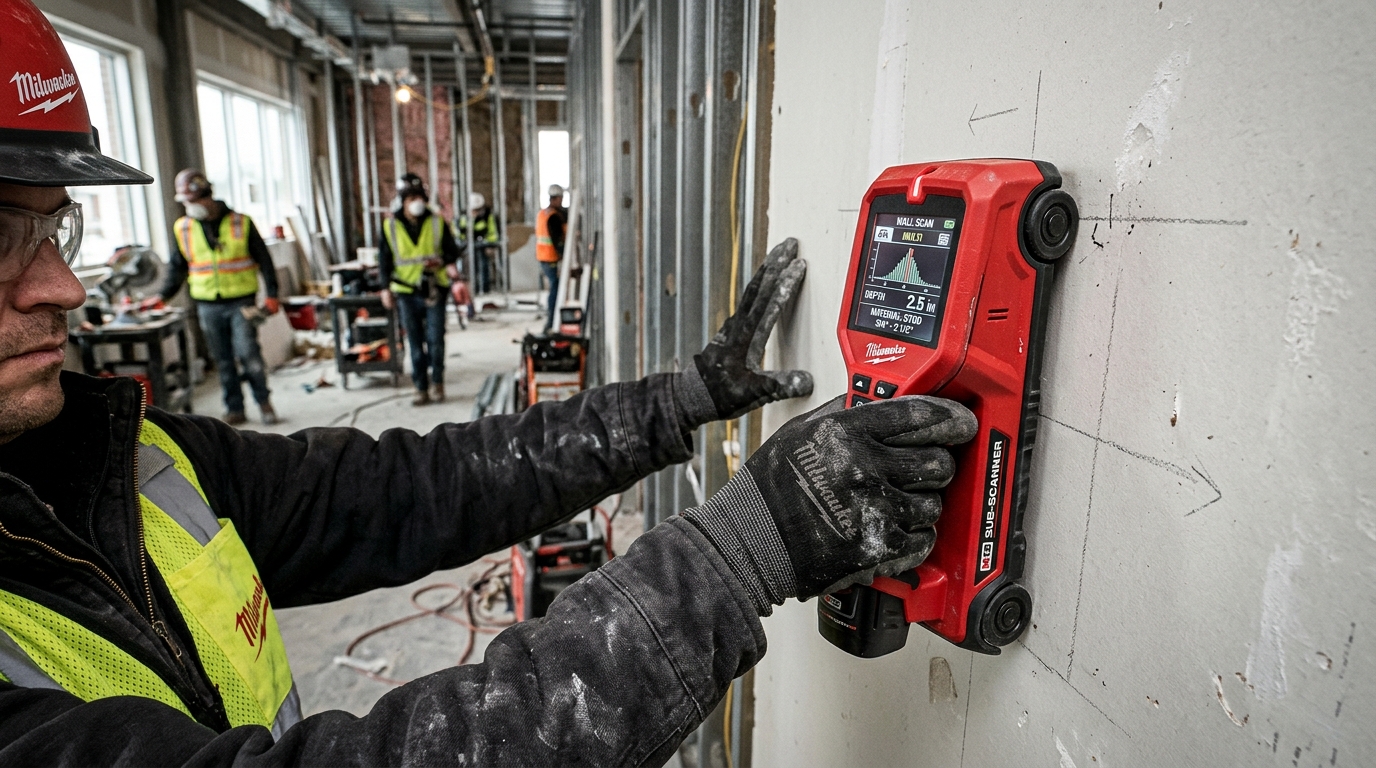
Commercial Sub-Surface Depth
Four smooth optical tracking wheels eliminate surface drag friction, delivering millimetric depth readings through tough substrates.
When Do You Actually Need the Milwaukee Sub-Scanner?
Ordinary stud finders fail outside standard 1/2" drywall. The M12 is engineered for extreme residential and commercial scenarios:
Bathroom Tile & Grab Bar Mounting
Dense ceramic and porcelain tiles reflect capacitive sensor signals, causing false readings. The Milwaukee penetrates tile mortar and cement backer board to confirm solid wood studs before you drill with diamond tile bits.
Prevents Cracked Tiles & Loose AnchorsBasement Concrete & Steel Rebar
When anchoring framing sole plates or mounting heavy electrical subpanels to basement walls, striking hardened rebar dulls expensive SDS rotary hammer bits. The M12 detects rebar up to 3 inches deep.
Saves SDS Drill Bits & Structural IntegrityLath & Plaster Wall Remodels
Homes built before 1950 have horizontal wood lath strips and horsehair plaster that baffle consumer stud finders. The Milwaukee's multi-channel radar identifies the deeper 2x4 vertical framing behind the lath.
Unmatched Plaster Penetration1. Multi-Material Differentiation (Beyond Just Wood)
On modern commercial projects, walls are framed with 25-gauge light steel studs, concrete masonry units, and complex runs of copper supply lines. A standard capacitive tool only signals "density," leaving the tradesperson guessing whether they found a wood stud or a high-pressure water pipe.
Milwaukee uses dual-channel sensing to classify target objects directly on its backlit LCD display:
2. The 4-Wheel Mechanical Tracking System
Most stud finders drag flat plastic pads across the drywall. On textured orange-peel drywall or rough plaster, this dragging motion produces micro-vibrations and electrostatic friction that trick capacitive sensors.
The Milwaukee Sub-Scanner rides on four smooth rubber tracking wheels connected to optical rotary encoders. As you roll the scanner across the wall, it tracks the exact distance rolled down to the millimeter, creating a distortion-free measurement matrix on screen.
3. M12 Cordless Platform & Commercial Reliability
Contractors hate finding dead 9-volt batteries in their toolboxes. Because the Sub-Scanner runs on standard Milwaukee M12 REDLITHIUM batteries, contractors can swap in the same battery packs used for their M12 impact drivers, drill drivers, and thermal imaging cameras.
For everyday residential homeowners, check out our guides for Franklin Sensors or DeWalt DW0150 which offer lightweight, compact form factors for basic TV mounting.
Frequently Asked Questions
Quick, authoritative answers to common wood framing, building code, and stud spacing questions.