Best Stud Finders of 2026: Tested & Reviewed
Whether you are mounting a 75-inch OLED TV, hanging floating kitchen shelves, or verifying wall framing layout, having an accurate stud finder prevents costly drywall damage and dangerous electrical punctures. In our comprehensive testing, we evaluated dozens of scanners across standard 1/2" drywall, thick 5/8" firecode sheetrock, and historic lath and plaster walls. If you are calculating framing spacing from scratch, explore our wall stud spacing calculator.
Quick Key Takeaways
- ✓Best Overall: Franklin Sensors ProSensor 710+ (13 instant LEDs, no calibration needed).
- ✓Best Budget & Plaster: C.H. Hanson 03040 Magnetic (neodymium magnets, zero false positives).
- ✓Best with WireWarning: Zircon MultiScanner A250 (CenterVision target spotlight + 120V AC alert).
- ✓Best 3D Radar: Walabot DIY 2 (smartphone app visualizes wood studs, PVC plumbing, and conduits).
Quick Verdict: Top Stud Finders by Category
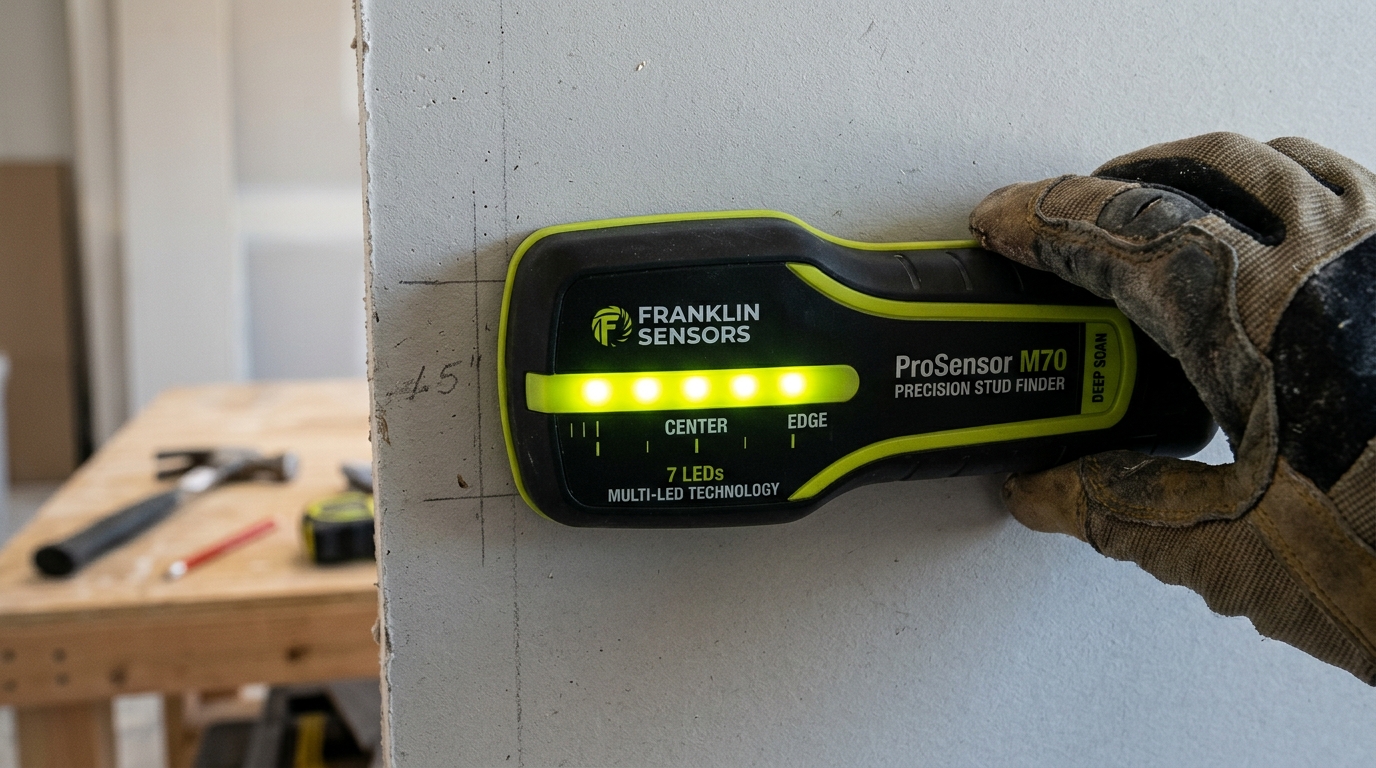
Franklin Sensors ProSensor 710+
13 precision sensors scan simultaneously. Displays the full 1.5" stud width with zero sliding or calibration required.
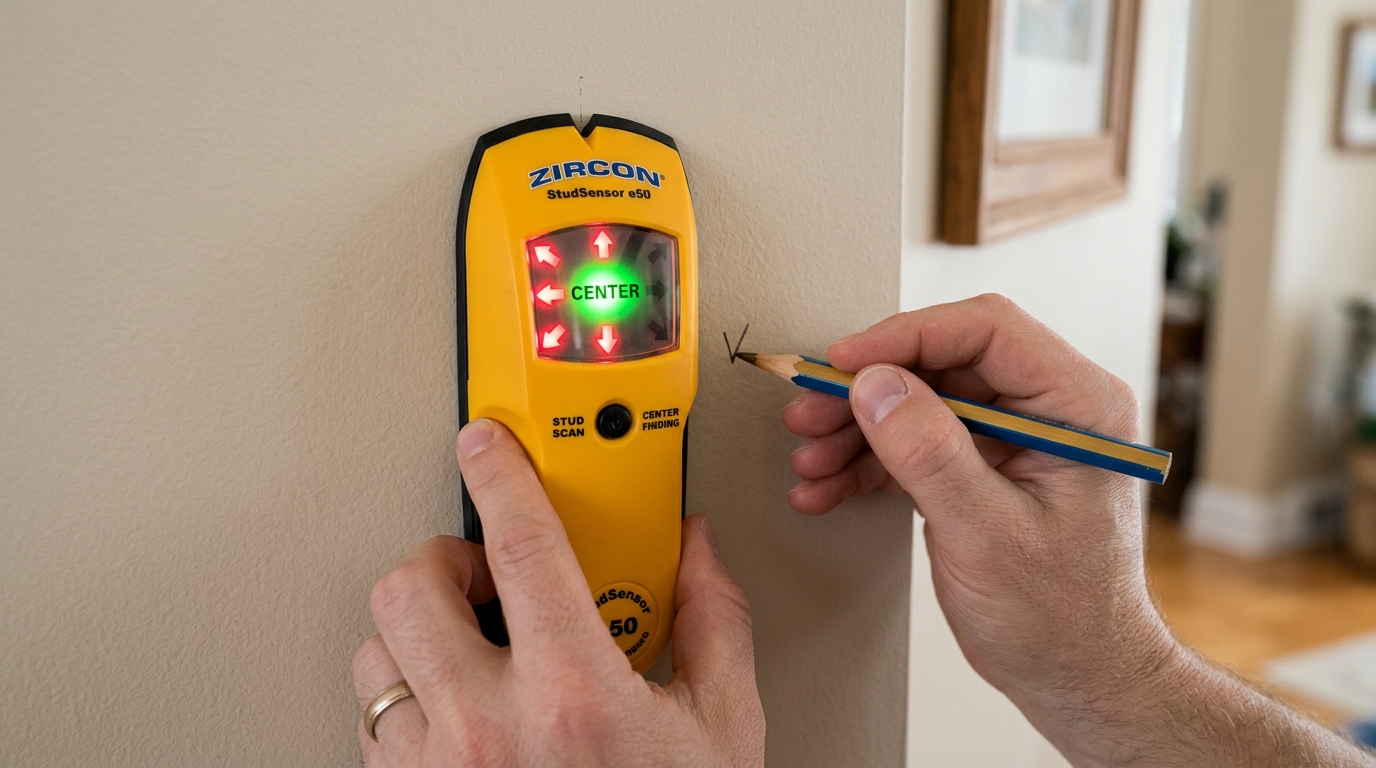
Zircon MultiScanner A250
Multi-mode scanner with LCD screen, CenterVision center-pointing beam, deep scan up to 1.5", and WireWarning live 120V AC alerts.
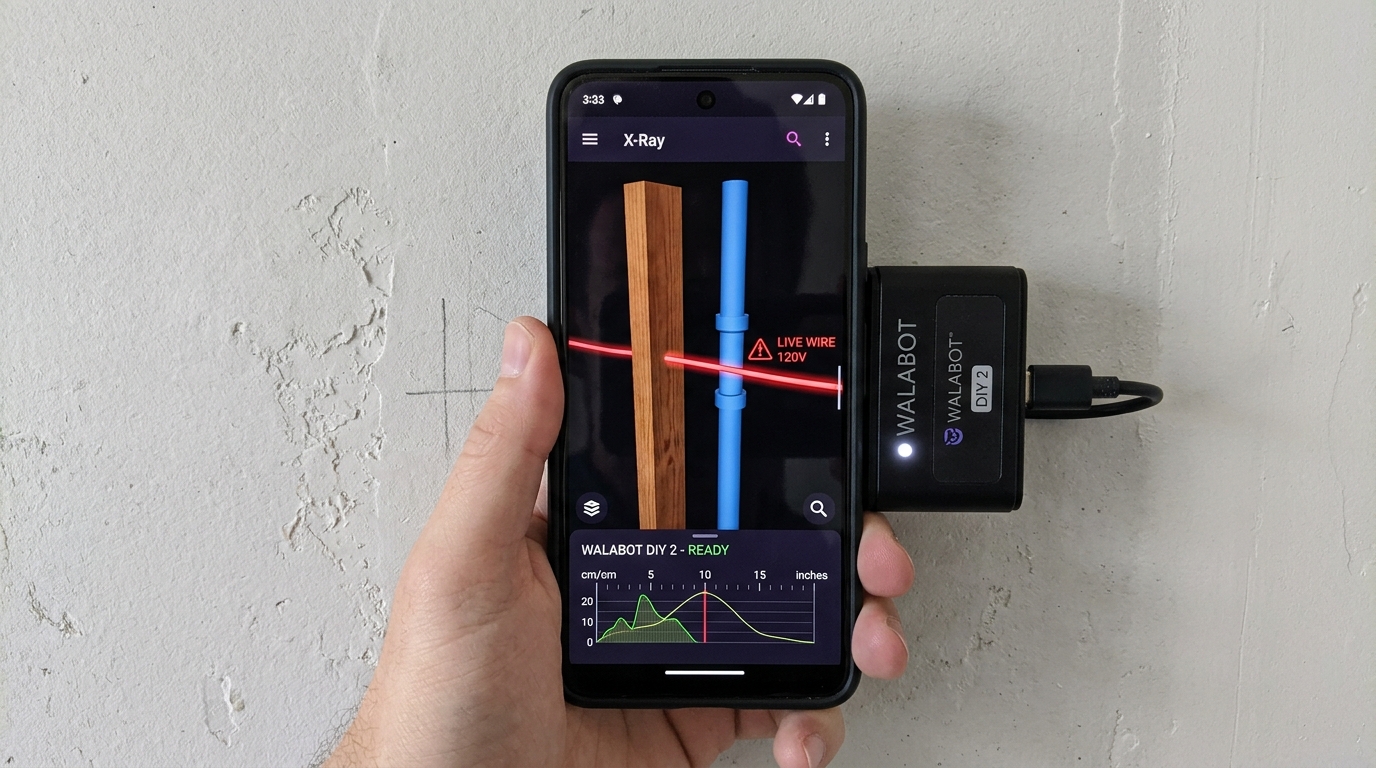
Walabot DIY 2 Scanner
True visual X-ray window up to 4" deep. Differentiates wood studs from PVC plumbing, metal conduits, and live electrical wiring.
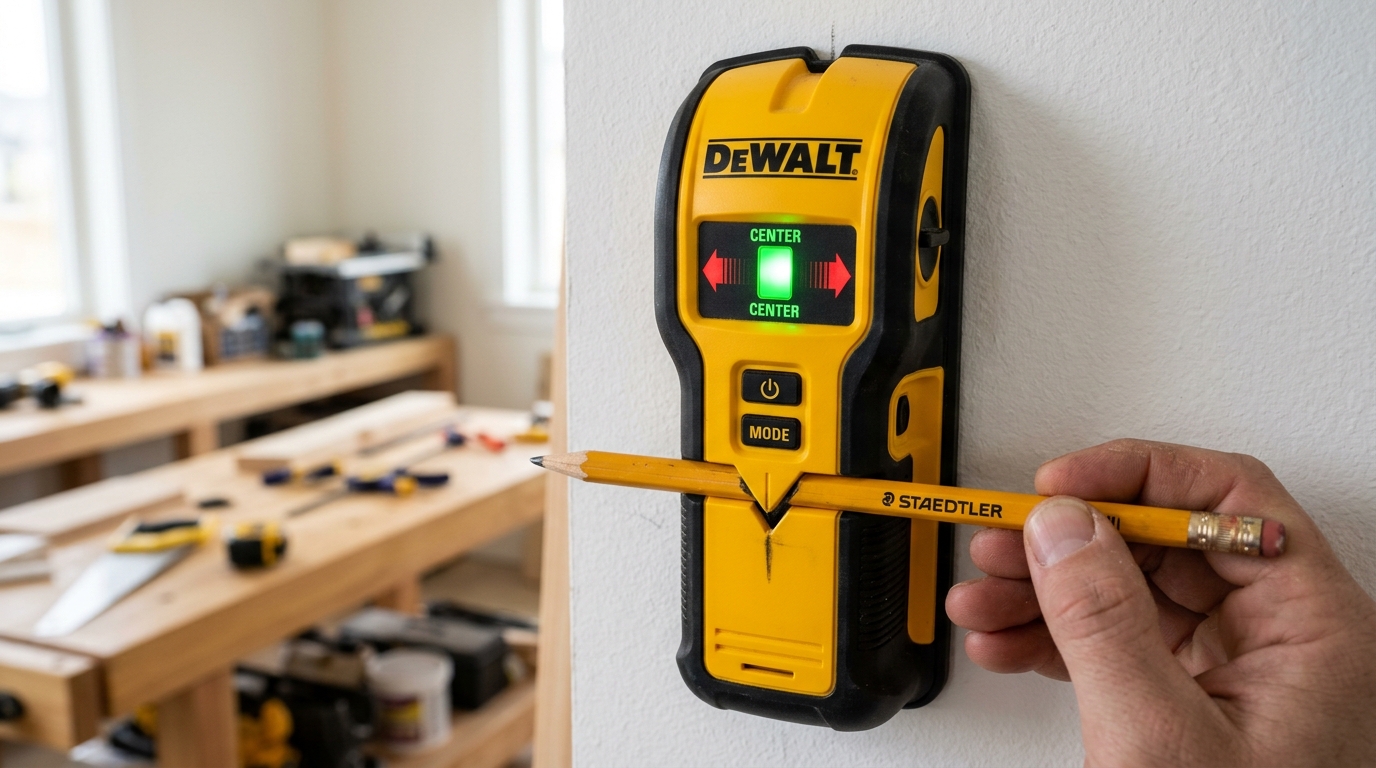
DeWalt DW0150 Center Finder
Drop-resistant rubberized casing with integrated pencil marking notch for fast drywall layout and continuous AC wire detection.
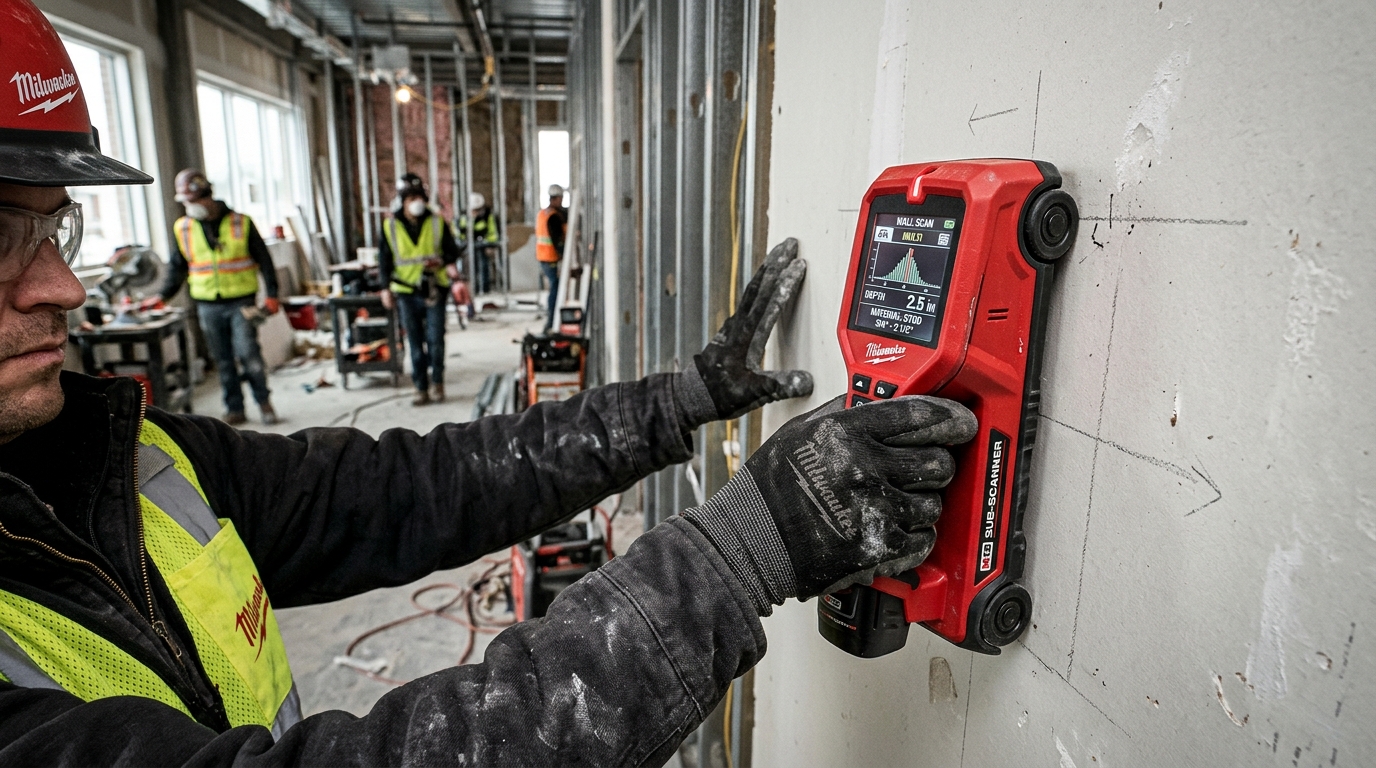
Milwaukee M12 Sub-Scanner
Rolls on 4 tracking wheels to scan 3 inches deep through ceramic bathroom tile, concrete masonry, and historic lath & plaster.
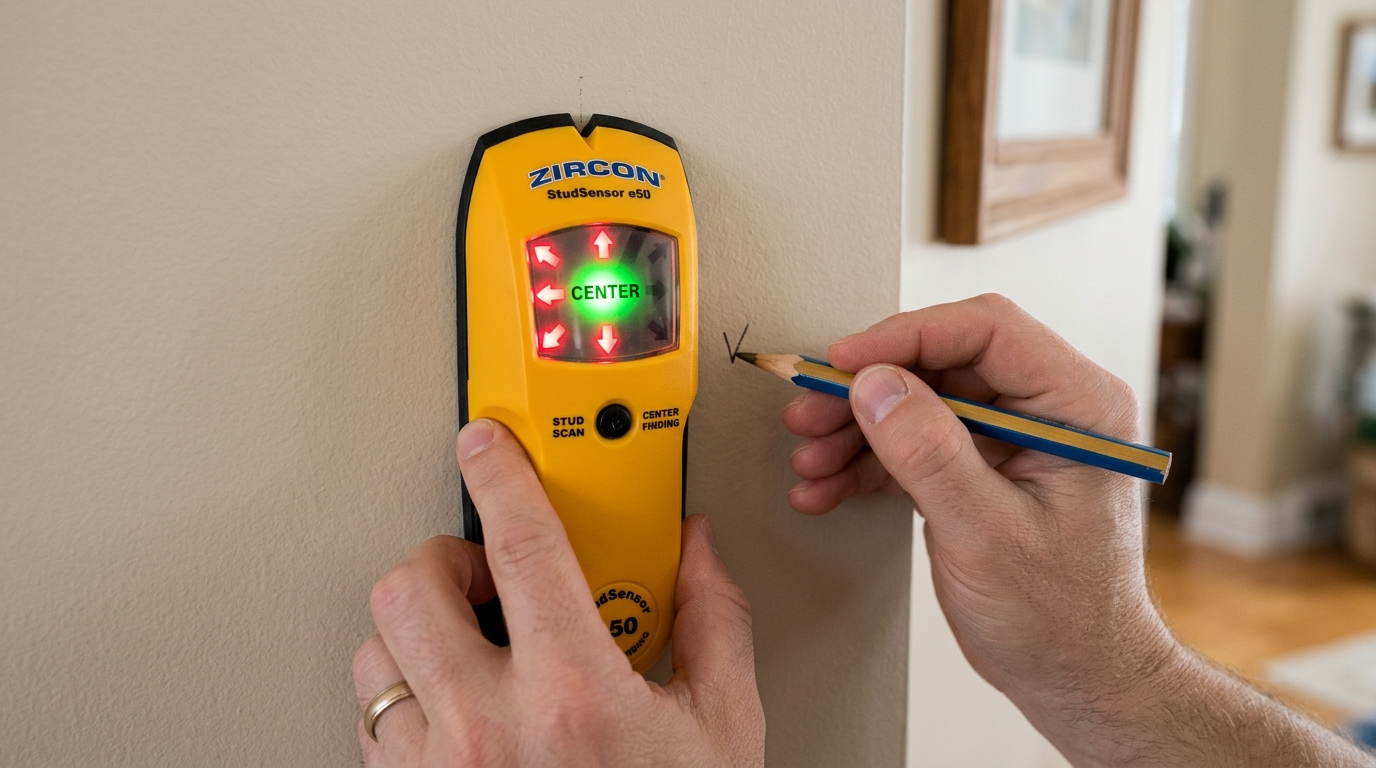
C.H. Hanson 03040 Magnetic
Rare-earth magnets latch directly onto hidden drywall screws. Zero batteries required, completely foolproof on historic lath & plaster.
Top Stud Finders Comparison Table
Direct side-by-side comparison of detection technology, scan depth, live wire alert, and target use cases.
| Model | Sensor Tech | Max Depth | Live Wire Alert | Plaster Friendly | Best Used For | Approx Price |
|---|---|---|---|---|---|---|
| Franklin ProSensor 710+ | 13-Sensor Multi-Sense | 1.6" (40mm) | No | Moderate | Drywall, instant 1.5" width | $49.99 |
| Zircon MultiScanner A250 | Capacitive Dielectric | 1.5" (38mm) | Yes (Continuous) | Low | Live wire avoidance, metals | $54.99 |
| Walabot DIY 2 | 3D Radio Frequency Radar | 4.0" (100mm) | Yes (Visual map) | Yes (Drywall/Tile) | Pipes, conduit, wires, deep scan | $149.99 |
| DeWalt DW0150 | Center-Finding Sensor | 1.5" (38mm) | Yes | Low | Heavy-duty framing & jobsite | $34.99 |
| Milwaukee Sub-Scanner M12 | Multi-Surface Radar/Inductive | 3.0" (75mm) | Yes (Voltage ID) | High (Drywall/Masonry) | Commercial trades, rebar, pipes | $249.00 |
| C.H. Hanson 03040 Magnetic | Rare-Earth Neodymium | 1.0" through drywall | No | Excellent (Finds nails) | Plaster walls, no-battery toolbox | $11.99 |
1. Franklin Sensors ProSensor 710+ — Best Overall
Rating: 9.8 / 10Traditional stud finders use a single capacitor pad and require you to slide the device back and forth across the wall to mark Edge A and Edge B. The Franklin Sensors ProSensor 710 completely eliminates this step with 13 precision sensors arranged in a horizontal row.
When pressed against drywall, multiple LEDs light up simultaneously to show the entire 1.5-inch width of the 2x4 stud in real time. It easily identifies double top studs, cripple studs, and 3-stud corner assemblies where traditional edge finders get confused.
- ✓ Instant readings without sliding or calibration
- ✓ Displays full 1.5" width and center at once
- ✓ Detects double and triple studs accurately
- ✓ Uses standard AA batteries with long lifespan
- ✗ No dedicated live AC wire alert
- ✗ Wider physical profile than single-sensor finders
2. Zircon MultiScanner A250 — Best with Live AC Wire Alert
Rating: 9.3 / 10Zircon is the pioneering brand in electronic stud detection. The Zircon MultiScanner A250 features CenterVision technology that projects an arrow pointer directly onto the wall when you cross the stud’s structural centerline.
Its primary safety feature is continuous WireWarning detection, alerting you to live, unshielded 120V and 240V AC electrical lines up to 2 inches deep. It also includes a DeepScan mode for 5/8" drywall and double-layer walls.
- ✓ Always-on live AC wire safety alerts
- ✓ DeepScan mode penetrates up to 1.5 inches
- ✓ Metal scan mode detects copper pipes & rebar
- ✓ Clear backlit LCD display
- ✗ Requires calibration on hollow wall before each sweep
- ✗ Sensitive to low 9V battery voltage
3. Walabot DIY 2 — Best 3D Visual Radar Scanner
Rating: 9.1 / 10For homeowners and remodelers who want to literally see behind drywall, the Walabot DIY 2 uses advanced radio-frequency radar. Paired via Wi-Fi to your iPhone or Android smartphone, it generates a full 3D visual map of wall internals up to 4 inches deep.
Unlike capacitive scanners that only detect density, Walabot classifies objects into wood studs, metal studs, copper plumbing pipes, PVC conduits, and live electrical cables.
- ✓ Sees up to 4 inches deep through drywall and tile
- ✓ Identifies PVC pipes and metal conduit
- ✓ Wireless connection to iOS & Android phones
- ✓ Shows real-time object depth in inches
- ✗ Higher price point (~$150)
- ✗ Does not work on historic lath & plaster
4. DeWalt DW0150 — Best Jobsite Durability
Rating: 9.0 / 10Built for tough framing jobsites, the DeWalt DW0150 features a reinforced rubberized body and a center-marking channel that lets you stick your carpenter pencil straight through the tool to mark the 3/4" stud centerline.
It automatically auto-calibrates constantly during use, compensating for varying drywall thicknesses up to 1-1/2 inches deep.
5. Milwaukee Sub-Scanner M12 — Best Commercial Multi-Surface
Rating: 8.9 / 10Engineered for commercial contractors, the Milwaukee Sub-Scanner M12 rolls across walls on four smooth tracking wheels. It differentiates between ferrous metals (steel studs and rebar), non-ferrous metals (copper tubing), and structural wood studs behind drywall, concrete, and masonry.
How to Choose the Right Stud Finder: 4 Key Factors
Frequently Asked Questions
Quick, authoritative answers to common wood framing, building code, and stud spacing questions.